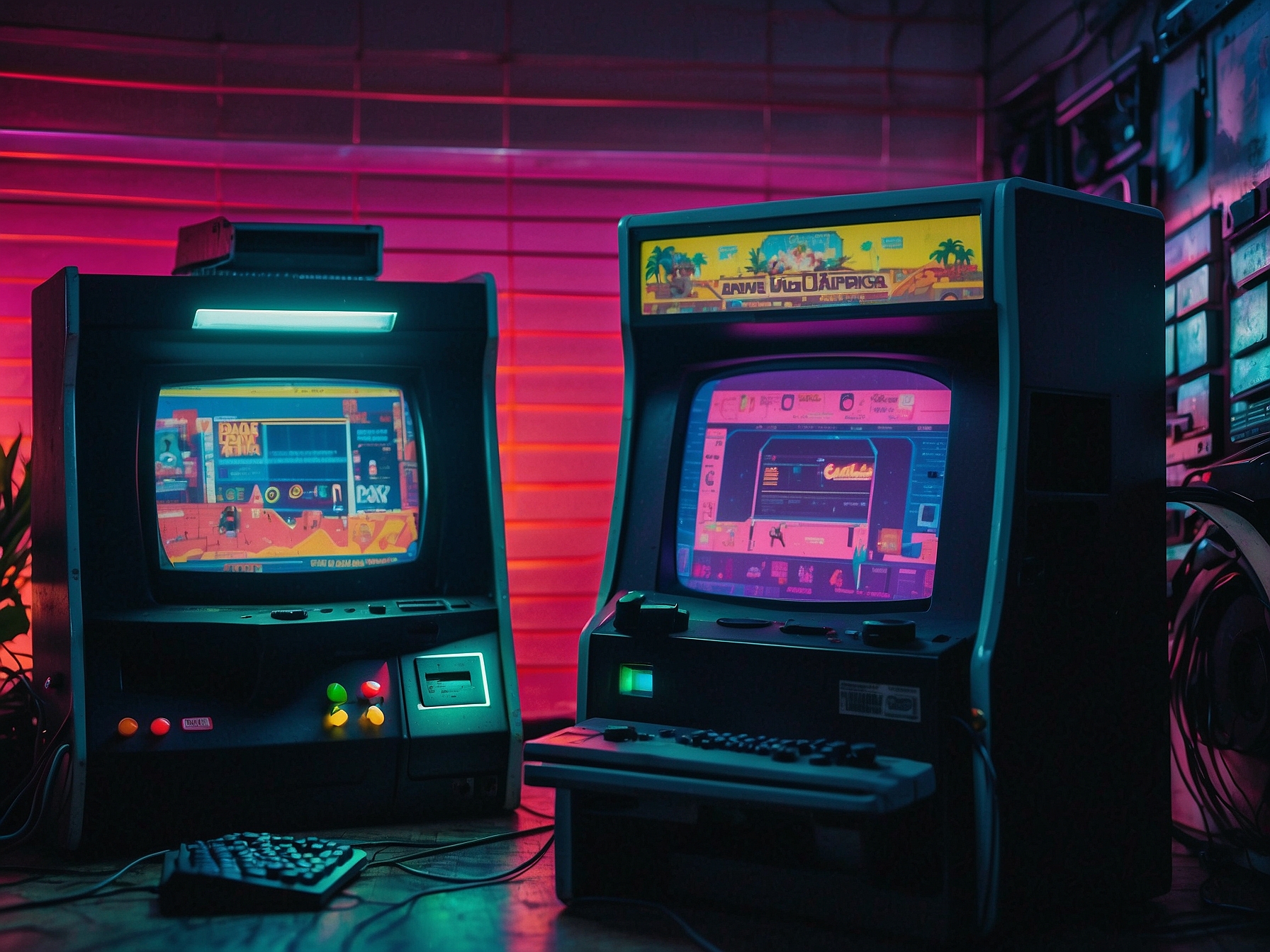
The Retro Gaming Renaissance: Why 90s Aesthetics Dominate 2026
Pixel art, CRT filters, and chiptune soundtracks are everywhere in 2026. Explore why retro gaming aesthetics have made a massive comeback.
Introduction: The Unexpected Revival
Something fascinating is happening in gaming. Despite having access to photorealistic graphics, ray tracing, and 8K displays, players in 2026 are gravitating toward games that look like they came from 1995. Pixel art, CRT filters, and chiptune soundtracks aren't just nostalgic curiosities—they're dominant trends shaping the industry.
This isn't random. The retro gaming renaissance is driven by psychological, artistic, and economic factors that have aligned to create a perfect storm of nostalgia-fueled innovation. In this deep dive, we'll explore why old is new again and which games are leading the charge.
The Psychology of Nostalgia
To understand the retro revival, we first need to understand nostalgia itself.
What Nostalgia Does to Us
Nostalgia isn't just pleasant memory—it's a powerful psychological state that:
- Creates feelings of social connectedness
- Increases self-esteem and optimism
- Provides comfort during uncertain times
- Makes us more willing to spend money
The gaming generation that grew up with NES, SNES, and early PC games is now in their 30s and 40s—with disposable income and a hunger for the experiences that shaped their childhoods.
Nostalgia Marketing
The entertainment industry has recognized this power:
- Movie reboots and remakes dominate box offices
- Music from past decades regularly charts
- Fashion cycles through retro styles
- Video games lean into familiar aesthetics
But gaming's retro renaissance goes beyond mere marketing—it represents a genuine artistic movement.
The Comfort of Familiarity
In an era of rapid technological change, pandemic disruption, and social upheaval, retro aesthetics offer something precious: stability. These games look like they did when life felt simpler. They trigger memories of childhood bedrooms, sleepovers with friends, and the excitement of unwrapping a new cartridge.
This comfort factor shouldn't be underestimated. Retro games feel like coming home.
The Artistic Case for Pixel Art
Beyond nostalgia, there are legitimate artistic reasons why pixel art thrives in 2026.
Constraints Breed Creativity
Early game developers didn't choose pixel art—they were limited to it. But those limitations forced creative solutions:
- Every pixel had to count
- Character designs needed to be readable at tiny sizes
- Color palettes were restricted, requiring thoughtful choices
- Animations had to convey motion with minimal frames
These constraints produced an aesthetic language that remains immediately recognizable and endlessly expressive.
The Timeless Appeal
Pixel art ages differently than 3D graphics:
Early 3D (PS1/N64 era) - Often looks rough and dated. Stretched textures, low polygon counts, and primitive lighting scream "old."
Pixel art - Looks intentional regardless of era. A well-crafted pixel character from 1990 looks just as good as one from 2026 because the style itself is the point.
This timelessness gives pixel art lasting value that expensive 3D productions rarely achieve.
Accessibility for Developers
Creating high-end 3D games requires: - Large teams of specialists - Expensive software and hardware - Massive budgets - Years of development time
Pixel art games can be made by: - Solo developers or small teams - Affordable or free tools - Modest budgets - Reasonable timeframes
This accessibility has enabled an explosion of indie games that might never exist if photorealistic graphics were the only acceptable standard.
The Sound of Nostalgia
Visual aesthetics are only part of the retro package—sound matters equally.
Chiptune Revival
The beeps and boops of 8-bit and 16-bit soundtracks have become a recognized genre:
- Chiptune artists fill concert venues
- Major games feature chip-influenced soundtracks
- The limitations of old sound chips created distinct sounds impossible to replicate
- Emotional associations make these sounds powerful
A simple chiptune melody can trigger more emotion than an orchestral score because of what it represents.
Sound Design Philosophy
Retro sound design follows principles modern games often ignore:
- Clarity - Every sound is distinct and recognizable
- Purpose - No sound is wasted; everything communicates information
- Memorability - Sounds become iconic through simplicity
- Integration - Audio and gameplay are inseparable
The Mario coin sound, the Zelda secret discovery jingle, the Sonic ring collection—these are etched into cultural memory because they were designed with intention despite (or because of) technical limitations.
CRT Filters and Visual Processing
Modern games increasingly include options to simulate old display technology.
Why Simulate Imperfection?
CRT monitors had specific characteristics that game developers designed around:
- Scanlines broke up images, reducing pixelation visibility
- Phosphor glow created soft edges and color bleeding
- Screen curvature added physical dimension
- Refresh rates produced subtle flicker
Modern displays eliminate these "flaws," but in doing so, they expose the raw pixels in ways designers never intended.
The Aesthetic Purpose
Adding CRT filters isn't just nostalgia—it's restoration:
- Games look as designers originally envisioned them
- Visual harshness is smoothed
- Colors blend more naturally
- The overall effect is warmer and more organic
Many modern pixel art games include extensive display options letting players dial in their preferred level of retro simulation.
Case Studies: Games Leading the Renaissance
Let's examine specific games that exemplify the retro revival done right.
Shovel Knight (2014)
Yacht Club Games proved that retro aesthetics could sell: - Authentic 8-bit visual style - Chiptune soundtrack by Jake Kaufman - Modern game design sensibilities - Critical and commercial success
Shovel Knight spawned expansions, spin-offs, and proved the market for intentionally retro games.
Celeste (2018)
This precision platformer combined: - Gorgeous pixel art with modern effects - Emotionally sophisticated storytelling - Incredibly refined gameplay - Accessible difficulty options
Celeste won multiple Game of the Year awards, demonstrating that retro aesthetics don't mean simplified experiences.
Stardew Valley (2016)
One developer created a game that: - Paid tribute to Harvest Moon and classic farming sims - Featured charming pixel art and music - Offered hundreds of hours of content - Became one of the best-selling indie games ever
Eric Barone proved a solo developer could compete with major studios using retro aesthetics.
Undertale (2015)
Toby Fox's RPG masterpiece featured: - Deliberately simple graphics - Innovative combat mechanics - Meta-commentary on gaming itself - Emotional depth that defied expectations
Undertale became a cultural phenomenon through word of mouth, proving story and design trump production values.
Hollow Knight (2017)
Team Cherry combined: - Hand-drawn aesthetic with retro sensibilities - Metroidvania exploration - Challenging but fair difficulty - Atmospheric world-building
The game proved that "retro-inspired" can mean evolved and refined, not simply imitative.
The Business Case
Beyond art and nostalgia, economics drive the retro renaissance.
Development Costs
AAA game development costs have skyrocketed: - GTA V cost approximately $265 million - Average AAA budgets exceed $50 million - Team sizes can reach thousands - Development cycles span 5+ years
Retro-styled games can achieve profitability with: - Budgets under $1 million - Teams of 1-20 people - Development cycles of 2-3 years - Lower risk tolerance required from publishers
The Indie Explosion
Digital distribution (Steam, itch.io, console stores) eliminated traditional barriers: - No physical manufacturing costs - No retail shelf competition - Global audience access - Direct player feedback
These conditions created an environment where a bedroom developer's pixel art game could compete for attention with $100 million productions.
Sustainable Development
The human cost of AAA development has become unavoidable: - Crunch culture causes burnout - Studios lay off staff after releases - Developer mental health suffers - Talent leaves the industry
Smaller retro-styled projects often allow: - Sustainable work hours - Job stability - Creative ownership - Better work-life balance
The retro renaissance is partly a correction against unsustainable AAA practices.
Platforms Enabling the Revival
Certain platforms have become havens for retro gaming.
Nintendo Switch
Nintendo's hybrid console has become the de facto home for indie games: - Portable play suits retro games perfectly - Nintendo's own history creates nostalgia synergy - eShop features extensive indie catalogs - Games like Hollow Knight and Celeste found huge Switch audiences
Steam
Valve's PC platform democratized game distribution: - Low barrier to entry for developers - User reviews surface quality games - Sales events introduce players to retro titles - Achievement systems add replay value
Itch.io
This indie-focused platform hosts experimental games: - Completely open publishing - Pay-what-you-want pricing - Game jams produce retro-styled experiments - Community supports alternative aesthetics
Mobile
Phones and tablets are natural homes for retro games: - Touch controls suit simple inputs - Pixel art scales well across devices - Short sessions fit mobile gaming - Nostalgia plays well with casual audiences
The Future of Retro
Where does the retro renaissance go from here?
Evolving Definition
What counts as "retro" will shift: - PS1-era 3D is becoming nostalgic - Y2K aesthetics are entering revival territory - Early HD games will eventually feel retro - The cycle continues indefinitely
Technical Expansion
Retro-styled games increasingly incorporate modern features: - Advanced lighting on pixel art - Physics systems in 2D games - Online multiplayer in classic genres - Modern accessibility options
Mainstream Acceptance
Retro aesthetics have achieved legitimacy: - Major publishers fund retro-styled games - Awards recognize the artistic merit - Media coverage is extensive - The conversation has shifted from "why pixel art?" to "what are you doing with pixel art?"
Play Retro Games Today
Windous95 is dedicated to preserving and celebrating retro gaming. Our library includes:
Classic DOS Games - Original DOOM, Wolfenstein, and more - Proper emulation preserving authentic experience - No setup required—just play
Retro-Styled Modern Games - Buckshot Roulette (horror meets tabletop) - Stickman Hook (physics platforming) - Dozens of HTML5 games with retro aesthetics
True Classics - Tetris, Snake, Minesweeper - Chess, Checkers, Solitaire - The games that defined casual gaming
All free, all playable instantly in your browser, all designed to remind you why you fell in love with gaming in the first place.
Conclusion
The retro gaming renaissance isn't a fad—it's a fundamental shift in how we value gaming experiences. Pixels have become art. Limitations have become features. Nostalgia has become a lens for appreciating timeless design.
Whether you're a veteran gamer returning to beloved aesthetics or a newcomer discovering the charm of simpler times, the retro revival welcomes you. These games aren't worse than modern releases—they're different, and that difference has value.
The future of gaming, it turns out, looks a lot like its past. And that's exactly as it should be.
Play 100+ retro and retro-styled games free on Windous95. No downloads. No installations. Just pure gaming joy.
Play This Game Now — Free!
Ready to experience it yourself? Play for free on Windous95 — no download required, works on any device!
Play Free Now